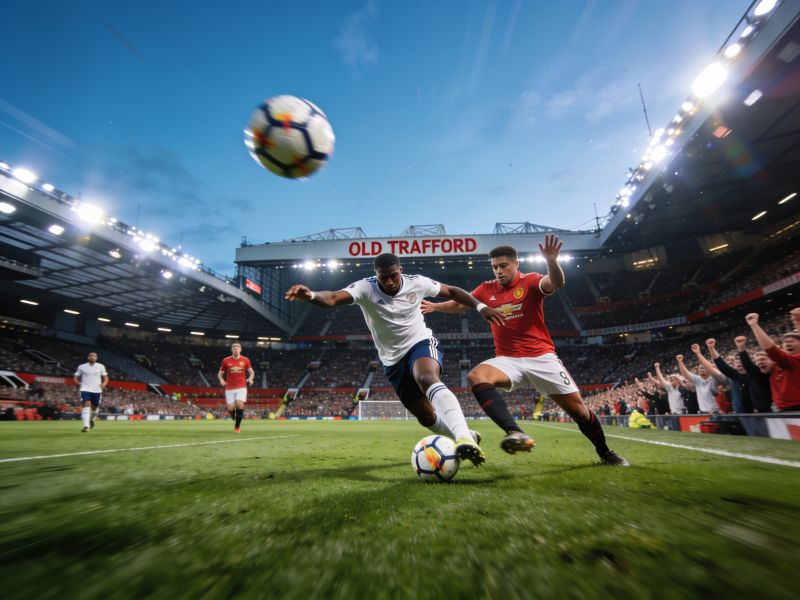
Manchester United vs Queens Park Rangers rarely tops the Premier League's marquee fixtures, yet the fixture carries a peculiar weight. Old Trafford has witnessed some bizarre QPR performances over the years—none more so than the 4-0 drubbing in September 2014。when Angel Di Maria, Ander Herrera, Wayne Rooney, and Juan Mata tore through a disjointed Rangers side. That afternoon, QPR's backline looked like strangers who had met in the car park an hour before kick-off. United's pressing was relentless, and the scoreline flattered the visitors. I remember watching Rio Ferdinand, then in QPR colours, struggle against his former club;every pass he attempted seemed to be intercepted, every tackle a step late. It was a harsh reminder of how quickly a top-level defender can look ordinary when the system around him collapses.Historically。Manchester United vs Queens Park Rangers has produced its share of upsets. The 1992-93 season, the inaugural Premier League campaign, saw QPR do the double over United—a fact often forgotten. Dennis Bailey's hat-trick at Old Trafford in January 1992 (in the old First Division) remains a cult reference among Rangers fans. United's dominance in the 1990s and 2000s largely suppressed such shocks, but the fixture's unpredictability lingers. QPR's 1-0 win at Loftus Road in March 2013, courtesy of a late Adel Taarabt strike, proved that a relegation-threatened side can still derail a title-chasing United. That match exposed United's vulnerability to compact, counter-attacking setups—a theme that would resurface in later seasons under different managers.Tactically, Manchester United vs Queens Park Rangers often hinges on midfield control. QPR, especially in away fixtures, tend to sit deep and concede possession, relying on quick transitions. United's challenge is breaking down a low block without becoming exposed to counters. In the 2014-15 fixture at Loftus Road, United won 2-0 but needed two late goals from Marouane Fellaini and James Wilson after QPR had frustrated them for 70 minutes. The pattern repeats: United dominate the ball, QPR absorb pressure, and the game turns on a set-piece or a defensive error. I've noticed that QPR's best performances against United come when they press aggressively in wide areas。
forcing United's full-backs into hurried clearances. When Rangers sit back passively, they get picked apart.Player connections add another layer. Several figures have crossed the divide—Rio Ferdinand, Park Ji-sung (briefly linked)。
and more recently, loan moves and youth transfers. These personal narratives inject extra bite into Manchester United vs Queens Park Rangers. For instance, when Chris Smalling or Phil Jones faced QPR, their physicality often overwhelmed Rangers' forwards, but the psychological edge cut both ways: ex-United players like Ravel Morrison or Charlie Austin relished proving a point. Austin's goal in a 1-1 draw at Loftus Road in 2014 showcased his knack for bullying United's centre-backs—a rare bright spot in an otherwise lopsided rivalry.Looking ahead, the fixture's relevance depends on QPR's league status. As a yo-yo club, Rangers' visits to Old Trafford are infrequent, which makes each encounter feel like a novelty. United。meanwhile, must guard against complacency;QPR's 2012-13 relegation season included a shock 1-0 win at Old Trafford in the League Cup, a result that highlighted United's susceptibility to motivated underdogs. The Manchester United vs Queens Park Rangers narrative is less about glamour and more about the Premier League's ruthless meritocracy—where history counts for little once the whistle blows. For neutrals, it's a fixture worth watching for its sheer unpredictability, even if the odds usually favour the home side.